Join
Programs
About
.png)



-p-1600.png)
.png)





Location:
Halifax Convention Centre
1650 Argyle St, Halifax, NS B3J 0E6
Discounted Hotel Rooms Available at:
Residence Inn by Marriott Halifax Downtown
1599 Grafton St, Halifax, NS B3J 2C3
To Book Click HERE (Limited quantity available)
1 Day General Admission - $600 CAD
2 Day General Admission - $800 CAD
Workshops + 2 Day General Admission - $950 CAD
Technical Tours + 2 Day General Admission - $950 CAD
Trade Show Booth (Team of 2) - $2000 CAD
Building Transformations is heading to the East Coast! We're excited to co-host a dynamic multi-day event in Halifax, Nova Scotia designed to bring the AECO community together.
In partnership with Building Transformations, buildingSMART Canada and the Construction Association of Nova Scotia, the 2026 East Coast Industry Summit brings together architects, engineers, contractors, owners, and digital practitioners to tackle the themes shaping Canada's built environment: digital transformation, Modern Methods of Construction, mass timber and prefabrication, BIM data management, national standards, and the productivity challenges facing a construction sector on the edge of an unprecedented regional boom.
Practitioners and leaders from across the country will share real project experience, hard-won lessons, and forward-looking strategies across two full days of breakout presentations — while technology exhibitors showcase the tools helping to shape the future of design and construction in North America.
Whether you're joining for the Technical Tours on Day 1, the hands-on Workshops, the packed presentation program, the technology exhibition, or simply the networking receptions that bring this community together, there's a ticket tier to match your goals and budget. Join us in beautiful Halifax, Nova Scotia and pair valuable learning and networking with the beauty of the East Coast.
Agenda at a Glance:
Day 1 — August 11
▪️ Technical Tours (ticketed, limited seats)
▪️ buildingSMART Canada Workshop (ticketed, limited seats)
▪️ OGC Canada Forum (open to all Summit attendees)
▪️ Innovation Showcase (open to all Summit attendees)
▪️ Opening Reception at Daryâ (open to all Summit attendees)
Day 2 — August 12
▪️ Keynotes, Panels & Presentations
▪️ Trade Show
▪️ Boat Cruise Networking Social (open to all Summit attendees)
Day 3 — August 13
▪️ Keynotes, Panels & Presentations
▪️ Trade Show
.png)
Interested in sponsoring or exhibiting?
🔗 Learn more about our Sponsorship Opportunities
🔗 Learn more about our Exhibiting Opportunity
Questions? Contact us at events@buildingtransformations.org
Subscribe to our newsletter if you’d like to be notified when registration is live!

Available to 'Technical Tour' Ticket Holders Only
Join us for a guided day exploring AECO innovation in action across 3-4 local sites. Attendees will travel comfortably between stops by coach bus, with lunch provided.
Important PPE Requirement:
Personal Protective Equipment (PPE) is strictly required for at least one of the site visits. Attendees must bring and wear their own:
Note: Spaces are strictly limited. Please ensure you select the "Technical Tours + 2-Day General Admission" ticket at checkout to secure your seat on the bus.
Generously Sponsored By: SALUS

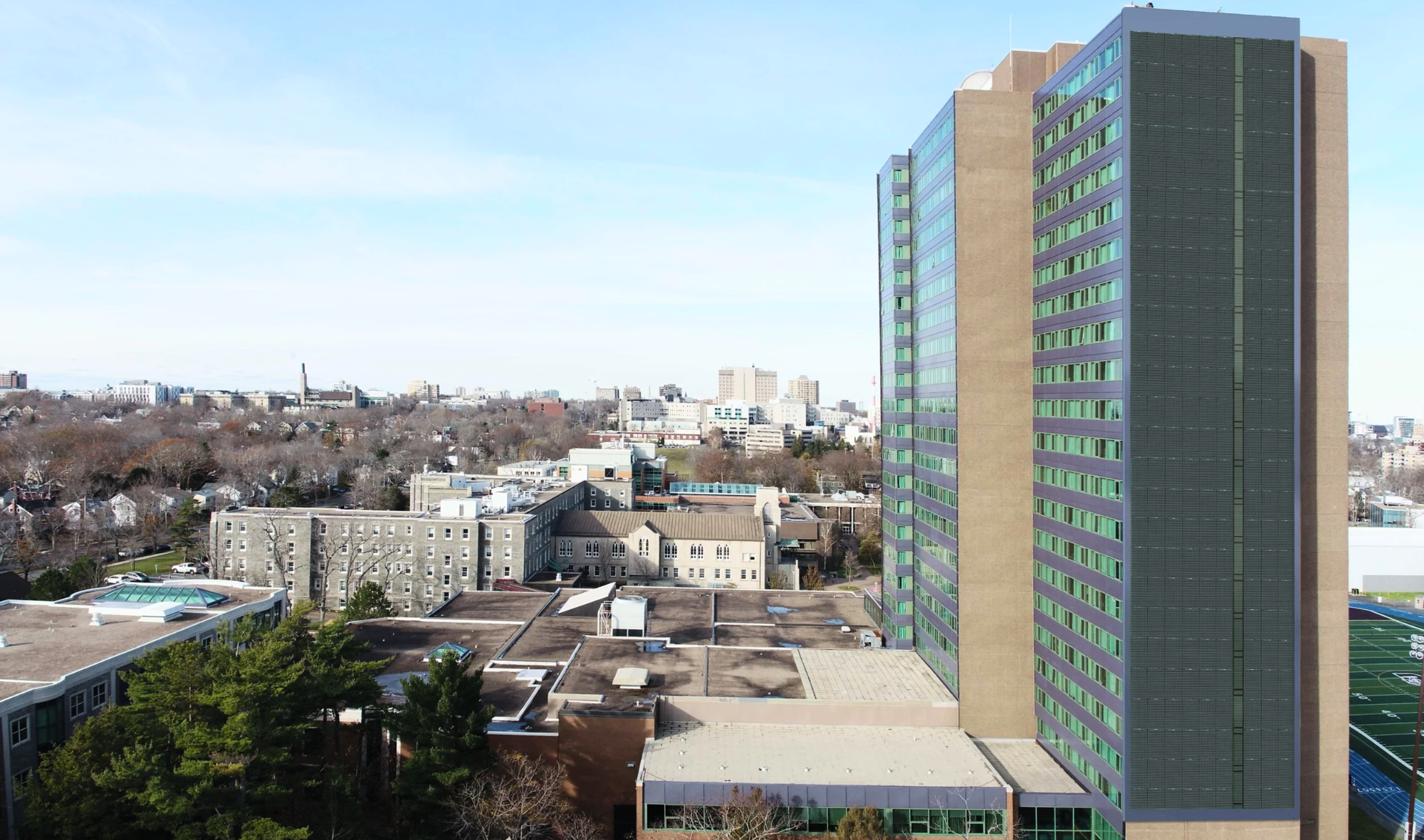
The Loyola Residence solar wall is a landmark achievement in sustainable design, towering 22 stories over Saint Mary’s University in Halifax. As the tallest Building-Integrated Photovoltaic (BIPV) façade in North America, this impressive 6,000-square-foot installation generates roughly 100,000 kWh of clean energy annually, supplying nearly half of the residential building's total energy needs.
During the tour, attendees will get an up-close look at North America's tallest BIPV installation to see firsthand how renewable energy can be seamlessly integrated into high-rise architecture. Guides will walk through the story of the project, using an interactive dashboard wall to highlight the decision-making process, engineering challenges, and key reasons behind the design choices. Finally, the tour moves behind the scenes into the inverter room to examine the critical system hardware that feeds clean power directly back into the grid.
.png)
The McNally East rooftop solar project represents a key milestone in Saint Mary’s University's transformative $20 million investment in green technology and campus-wide energy efficiency. By converting classic institutional roof space into a modern generation site, this turnkey solar installation plays a vital role in advancing the university’s long-term sustainability and net-zero carbon goals.
During the tour, attendees will examine the engineering behind this rooftop array and discover how it works in tandem with Saint Mary's other landmark clean-energy installations, like the adjacent Loyola Residence BIPV facade. Guides will walk visitors through the project's interactive dashboard wall, exploring the critical design decisions, financial models, and operational considerations involved in executing a major campus retrofit. The stop wraps up with a visit to the dedicated inverter room to review the electrical distribution setup that converts direct current into usable power for the campus grid.
Lunch and a beverage will be provided to tour attendees during a midday break.
Please bring your own water bottle, or additional snacks if needed.
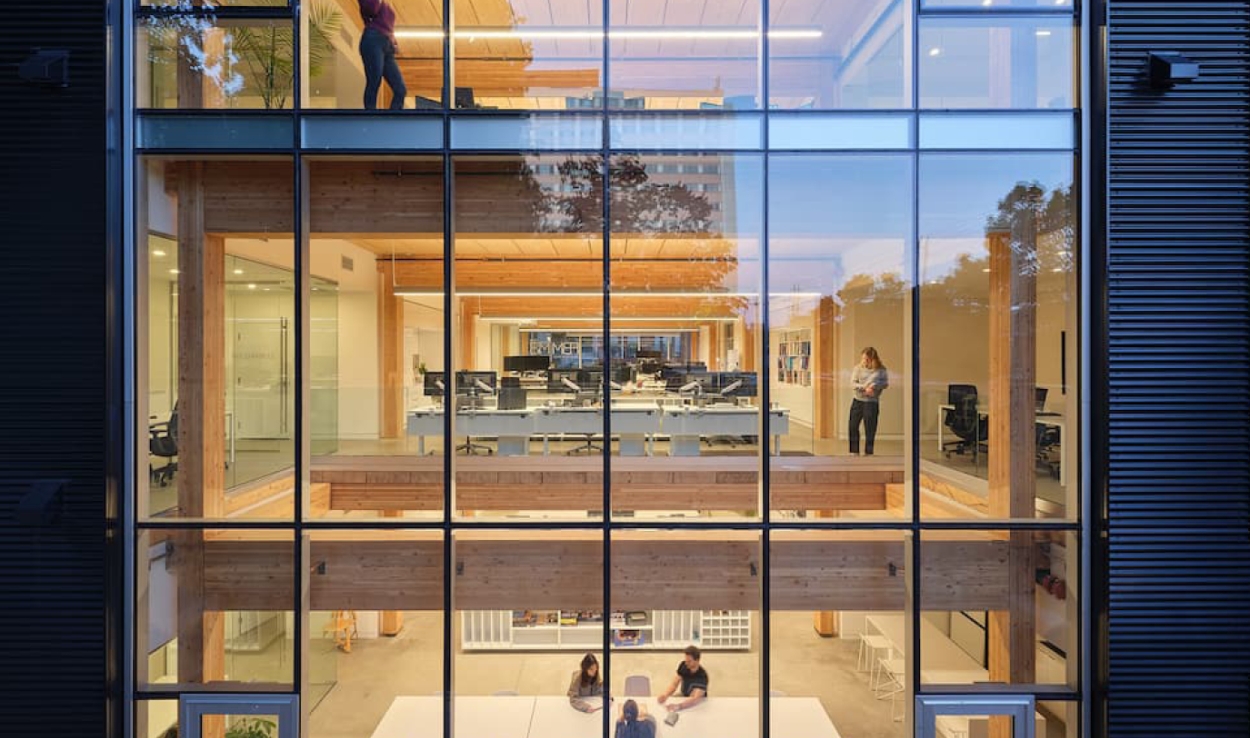
Explore Cunard Street Live Work Grow, a five-story mass timber structure and its integration into a modern, mixed-use design. This tour offers a firsthand look at how innovative materials are shaping the future of urban development in North America.
(Tour Ticket Holders Only)
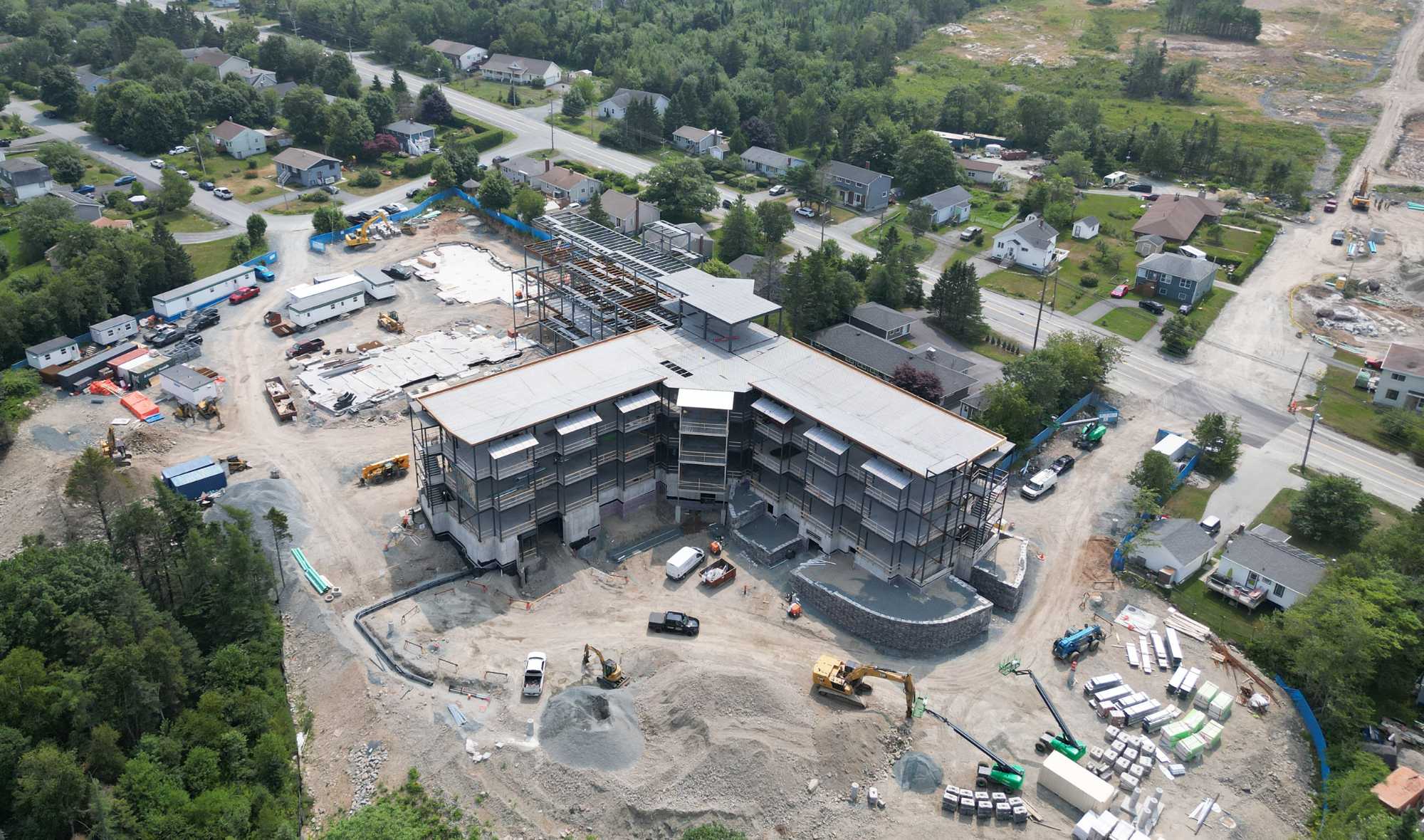
The Princeton Long Term Care Facility is a new two-storey, 128-resident long-term care facility in Halifax, Nova Scotia, replacing the existing Melville Lodge. The project provides a modern care environment designed to support residents and healthcare staff while meeting current long-term care standards.
Virtual Design and Construction (VDC) has played a key role in supporting the project's delivery through 3D BIM coordination, model-based design reviews, clash detection, and digital issue management. Using standard coordination tools such as Revit, Revizto, and Autodesk Construction Cloud (ACC), the project team has resolved more than 2,800 coordination issues throughout design and construction, helping maintain alignment between consultants, trades, and the project team.
BIM coordination also enabled the identification and resolution of several major conflicts between building systems and the structural steel frame before fabrication, reducing construction risk and helping avoid costly downstream changes. The coordinated models further supported the prefabrication of mechanical room piping, allowing installation assemblies to be planned and validated digitally before fabrication and installation in the field. Together, these workflows provided a common source of truth for project stakeholders, supported informed decision-making, and improved overall project execution.
PPE is required for this tour. Attendees must provide and weare their own:
(Tour Ticket Holders Only)
Available for "Workshops + 2 Day General Admission" ticket holders ONLY.
Available for "Workshops + 2 Day General Admission" ticket holders ONLY.
Located in Room 201

Available for "Workshops + 2 Day General Admission" ticket holders ONLY.
An interactive half-day on what BIM really is, how it eases the everyday decisions projects turn on, and what connecting it with GIS makes possible for the people who own and run the assets.
If a past BIM effort has felt underwhelming, that’s a common experience, and it isn’t a failing on anyone’s part. BIM has too often been sold as software and taught as standards, so the value it promises owners rarely arrives. This session takes a different route. It starts from the everyday decisions real projects turn on and shows in practice how BIM, OpenBIM and GIS together make those decisions clearer, quicker and easier to trust. It’s where BIM stops being abstract and starts being useful.

Lunch will be provided for our morning Workshop Participants (Workshop Ticket Holders Only)
The Open Geospatial Consortium (OGC) establishes the open standards and API specifications that governments and organizations use to fulfill their public open data mandates. OGC standards are freely accessible, vendor-neutral, and ensure geographic data is openly shared across different systems.
The Canada Forum fosters open discussions on geospatial issues relevant to Canadian government, Indigenous, industry, and academic groups, welcoming all to participate regardless of OGC membership.
The OGC organizes its activities through working groups, committees, and regional forums, like the Canada Forum.
Held in Room 201.
Everyone is welcome to attend.
The Open Geospatial Consortium (OGC) establishes the open standards and API specifications that governments and organizations use to fulfill their public open data mandates. OGC standards are freely accessible, vendor-neutral, and ensure geographic data is openly shared across different systems.
The Canada Forum fosters open discussions on geospatial issues relevant to Canadian government, Indigenous, industry, and academic groups, welcoming all to participate regardless of OGC membership.
The OGC organizes its activities through working groups, committees, and regional forums, like the Canada Forum.
Held in Room 201.
Everyone is welcome to attend.

The Collaborative Geospatial Strategy for Canada (2026–2031) is Natural Resources Canada's (NRCan) framework to modernize the country's geomatics ecosystem. Designed to build resilient communities and improve decision-making, the strategy focuses on unlocking the data value chain and enhancing climate adaptation, disaster management, and economic development.
The strategy is organized around the Canadian Geospatial Data Infrastructure (CGDI) and supported by several targeted national programs and spatial initiatives.

Carleton’s CIMS (Carleton Immersive Media Studio) Digital Twin (CDT) platform is an award-winning, open-source, web-based tool designed to connect geospatial (GIS) and building information modeling (BIM) data.
Open Data: The platform allows users to visualize and manage assets across the built environment without needing specialized proprietary software, and access to multi-scale geospatial information systems (GIS), open data, open building information modeling (BIM), and various other types of digital media.

The Halifax Port Pilot Project and local marine authorities leverage the International Hydrographic Organization's (IHO) S-100 universal maritime data model. This framework provides highly precise, real-time data integration—such as high-resolution bathymetry (S-102) and dynamic water level (S-104) and current (S-111) layers—directly into Electronic Chart Display and Information Systems.
Open Standard: The S-100 universal hydrographic data framework, developed by the International Hydrographic Organization (IHO), is an open standard. The underlying specification and data structures are publicly accessible, and agencies frequently release select datasets as open data for testing and research purposes.
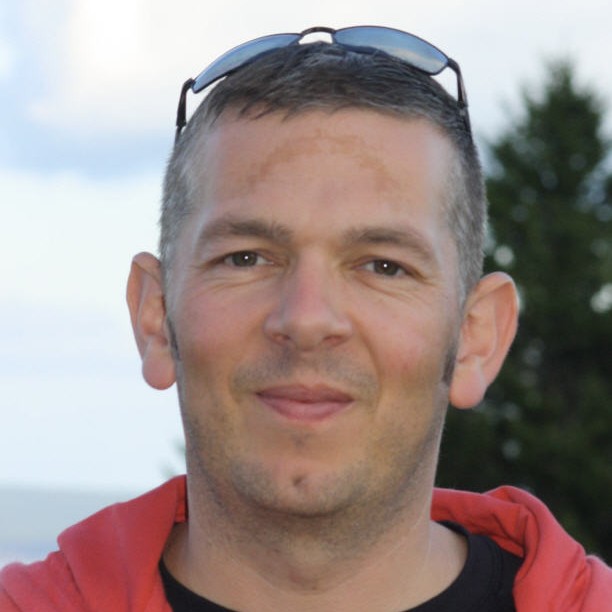
Richard co-chairs the Task Information Group 92 (TIF92) for the CRTC Emergency Services Working Group which has developed the data model for NG 9-1-1. Next Generation 9-1-1 is a nationwide modernization of emergency communications in Canada, transitioning 9-1-1- services from outdated analog networks to a secure, digital IP-based infrastructure.
Open Standard: Next Generation 9-1-1 (NG9-1-1) is built entirely upon open, internet protocol (IP) standards. The global framework for NG9-1-1 is primarily defined by the NENA i3 standard, established by the National Emergency Number Association (NENA).

As AI becomes increasingly integrated into the digital built environment, Dr. Komeilipoor explores why AI alone is not enough for government and critical infrastructure applications. Reliable outcomes require combining artificial intelligence with trusted data, verification, computer vision, and knowledge representation because trustworthy decisions begin with trustworthy information. Drawing on Findora AI’s neuroscience-inspired approach to trusted AI, the session demonstrates how transparent, source-backed AI can improve confidence in decision-making across engineering documents, GIS, BIM, digital twins, and other structured and unstructured enterprise data.

Participant speakers, Association and Industry representatives will discuss ways of supporting the Digitalization of the Built Environment in Canada.
• Gordon McElravy – Director, buildingSMART Canada (bSC) (MODERATOR)
• Andy Hoggarth – Vice President and General Manager, Teledyne CARIS
• Paul Churcher – Chief of Site Infrastructure Spatial Team, Department of National Defence (DND)
• Robert Harris – NG911 Data and Solutions Manager, Esri Canada
• Prof. Stephen Fai – Director, Carleton Immersive Media Studio
• Lise Arsenault – Digital Built Atlantic
• Mark Cichy – Principal, Director of Design Technology - HOK, CDO and Secretary - Building Transformations
The Innovation Showcase, is a fast-paced and practical session designed to show you exactly how cutting-edge technology is solving real-world industry challenges. Moving away from traditional speaking sessions, this segment features a series of concise, 10-minute, project-based presentations focused entirely on real implementations, key outcomes, and honest lessons learned. Each participating company will break down the specific challenges they faced, the digital processes they applied, and the tangible benefits achieved. It is a unique opportunity to gain actionable insights and see proven technological solutions in action—all in one high-energy session.
Held in Room 201.
Everyone is welcome to attend.
Drink tickets for the Opening Reception will be distributed at the Innovation Showcase, so we encourage you to attend.
Kick off the East Coast Summit "Rising Tides of Innovation: Embracing Change in AECO" with an evening of connection and conversation at Daryâ Halifax.
All Summit attendees are welcome! Enjoy one complimentary drink along with tasty food and refreshments as you connect with other builders, designers, trades, technology providers and owners. This reception sets the tone for the days ahead, sparking ideas, new collaborations, and reunions with familiar faces.
Located at 110-1709 Lower Water Street in the Queen's Marque District, Daryâ faces the Queen's Landing stairs.
Enter the district through South Chock. Paid parking is available in the Queen's Marque Parkade (off Lower Water St), or in surrounding streets and paid lots. The venue is fully accessible.
Generously sponsored by GRAITEC.
Arrive, check in, and enjoy a light breakfast while connecting informally with fellow attendees before the program begins.
Explore the cutting edge of building technology on the Trade Show floor, where leading solution providers showcase the tools, platforms, and innovations shaping the future of architecture, engineering, construction, and operations. Browse exhibitor booths, discover new products, and connect directly with the companies driving transformation across the built environment.
Opening remarks outlining the objectives of the event, key themes for the day, and what participants can expect from the sessions ahead.
Many experts see Atlantic Canada at the leading edge of an unprecedented construction boom. Sustaining population growth of 1–2% annually will require the region to deliver thousands more homes each year than it has historically built, alongside significant expansion in industrial, commercial, and institutional construction. Major investments in energy infrastructure and emerging industrial opportunities are accelerating this demand. Yet these opportunities arrive amid real constraints: nearly one‑third of the construction workforce is 55 and older, productivity (particularly in residential construction) lags other sectors, and digital and emerging technologies have yet to deliver the gains seen in manufacturing, agriculture, mining, etc. David will explore how Atlantic Canada can harness innovation in construction to unlock productivity to support economic growth across the region over the next 15–20 years.

A scheduled break to recharge, grab another coffee, continue conversations, and prepare for the next set of sessions.
The Atlantic Science Enterprise Centre is a project where DSA has been collaborating with PSPC and Pomerleau on its delivery. As part of the project mandate, the lead appointed party was to develop a strategy leveraging Integrated Design Processes leveraging BIM to support project delivery during de and construction. As part of collaboration with multiple offices located in various provinces around the country, we are delivering a multi-million project where collaboration is a critical piece. ISO 19650 was key piece of the puzzle where guided the project team on developing and documenting all processes workflows to ensure all users were aware of the project needs. Being a federal project, a huge effort w also put in place to define security guidelines and protocols to ensure information produced by the de team was following all federal requirements for classified information. The presentation will also go th the processes on how we supported the client on the development of the AIR and EIR for the project, ensure information being produced would allow the users of the building to leverage the BIM models t support their Facility Management systems.

Over the past two decades, Modern Methods of Construction (MMC) and Design for Manufacture and Assembly (DfMA) have transformed the UK healthcare sector, reshaping how hospitals are designed, procured, and delivered. BDP has been a central driver of this transformation, evolving from early CAD-based workflows to fully integrated digital design ecosystems that enable manufacturing-led delivery, enhanced collaboration, and greater certainty in cost, programme, and quality.
BDP’s digital journey began with pioneering adoption of BIM Level 2 and active involvement in shaping national standards. This early leadership established the foundations for a data-driven approach to healthcare design, where information flows seamlessly across multidisciplinary teams and directly into fabrication. Over 20 years, BDP has refined a design methodology that aligns clinical requirements, digital modelling, and contractor expertise to maximise the benefits of MMC.
Alder Hey Children’s Hospital in Liverpool marked a step-change in the application of MMC in UK healthcare. Through early engagement with Laing O’Rourke, the project team aligned design intent with manufacturing strategy from the outset. BIM was used for precise cost planning, logistics sequencing, and direct model-to factory workflows. More than 15,000 off-site manufactured components—including pre-glazed façade panels, MEP modules, bathroom pods, lattice floors, and twin walls—were integrated into the scheme. The result was a delivery programme 20% faster than traditional methods, with improved quality, reduced waste, and safer construction.

Every complex project starts with the same goal: one connected, reliable dataset for room data. Then milestones hit. Room numbers change in the planning tool but not in Revit. Equipment lists live in spreadsheets no one told the BIM team about. The planner, the architect, and the owner each work fr different version.
This session tells the story of what causes room and equipment data to drift, why it keeps happening even well-run projects, and what a practical governance framework actually looks like to prevent it. W cover how to connect Functional Program data, Room Data Sheets, and equipment lists to BIM eleme through clear data ownership and version control, how AI can flag inconsistencies and support autom compliance checking, and how to use milestone-based QA checkpoints to catch problems before they become delivery issues.


Mass timber is emerging as a key component of Modern Methods of Construction (MMC) across Atlantic Canada, offering opportunities to accelerate project delivery, improve sustainability outcomes, and support regional economic development. However, successful implementation requires more than material selection — it demands practical knowledge across design, manufacturing, logistics, procurement, and construction.
This presentation explores the “know-how” behind delivering mass timber projects in Atlantic Canada. The session will examine key considerations such as early-stage coordination, prefabrication strategies, transportation and erection planning, hybrid structural systems, and code and compliance pathways.
Attendees will gain insight into where mass timber provides the greatest value, the challenges unique to Atlantic Canada, and how project teams can successfully adopt modern construction approaches to improve speed, efficiency, and project outcomes.
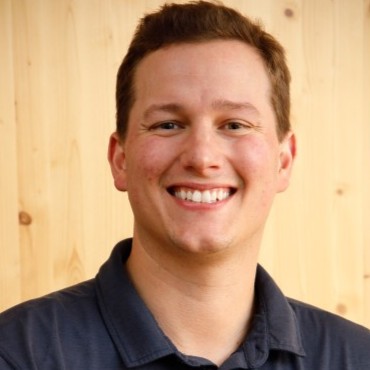
The Centre Block project is exceptional in scale and significance, but the construction challenges it presented are not unique. Confined-access underpinning, segmented pile installation, tight movement tolerances, and the need to keep a building operational throughout a major below- grade programme are conditions that arise on heritage retrofits, dense urban sites, and occupied institutional buildings across the country. The principal lesson from this project: When standard methods do not fit the space, the answer is not to force them — it is to develop something better.

The demand for faster and more efficient housing development in Canada has created a need for innovative systems. Prefabricated precast concrete construction offers a practical solution that can shorten construction timelines by 20–50%. In addition to accelerating project delivery, prefabrication improves quality control, minimizes material waste, enhances site safety, and enables year-round construction independent of weather conditions.This session will present lessons learned from a 16-storey precast concrete building project in Dartmouth, Nova Scotia. Key topics will include the evolution of the design concept, structural and connection detailing, manufacturing considerations, transportation logistics, and installation sequencing.In addition, the session will highlight the sustainability benefits of precast concrete systems through findings from recently published life cycle assessment (LCA) studies on precast building solutions. Attendees will gain insight into how modern precast concrete systems can support accelerated project delivery while contributing to improved construction efficiency, reduced waste, and lower environmental impacts.

Atlantic Canada's infrastructure renewal backlog is widening faster than the industry can absorb it. With fiscal, workforce, and sustainability considerations becoming critical, the gap can't be closed by building within the current paradigm. This panel asks how innovation, eg. digital delivery, industrialized construction, and circular renewal, can actually help to close it.




Extended break time for informal networking, refreshments, and transition between sessions.
Large healthcare projects present unique coordination challenges, combining highly serviced spaces, specialized systems and equipment with strict phased construction deliverables. As healthcare projects across Atlantic Canada continue to grow in scale and complexity, we will have to adapt our traditional coordination workflows to better leverage digital information and emerging technologies. The Cape Breton Regional Hospital project provides an example of this evolution in practice. This presentation walks through how BIM was leveraged across multiple buildings and project teams, focusing on the processes and technologies used to manage information and support collaboration.

The AEC industry operates within a uniquely complex digital environment, where expanding toolsets and evolving project demands have produced fragmented ecosystems, interoperability challenges, and persistent data silos. Off-the-shelf platforms rarely align with the operational realities of a design studio, leading to costly add-ons, inefficient workflows, and institutional knowledge that is difficult to access or reuse. This session, led by Turner Fleischer’s Principal and CTO, Brent Mauti and Manager of Digital Practice, Artyom Savin, will explore how Turner Fleischer addresses these challenges by building deep internal digital capability with dedicated software development expertise. Rather than starting with technology alone, the Studio begins with business processes, data integrity, and how teams actually work—then develops custom tools aligned with that foundation. Bridging data strategy and in-house software development closes gaps left by commercial platforms and creates adaptable solutions that support both studio-wide workflows and project delivery.

As the AECO industry accelerates toward digital-first project delivery, engineering firms face increasing pressure to standardize their processes, modernize their data, upskill their workforce, and integrate emerging technologies like automation, reality capture, and AI. Yet many organizations focus on tools rather than transformation, leading to uneven adoption and missed opportunities. This presentation explores why a structured digital roadmap, anchored by foundations but designed for future-readiness, is now essential for organizations. Drawing on practical implementation experience and insights from large-scale digital strategies – such as digital delivery roadmaps, ISO 19650 initiatives, digital twin readiness programs, automation portfolios, and AI in delivery – the session will illustrate how firms can move from digital experimentation to integrated, mature digital delivery.

Oftentimes, use of technology in the construction process focuses on one discipline only. We will examine how cloud-based platforms can remove the silos that exist between design, manufacturing, and construction by seamlessly linking critical data from varied software tools into a complete data set.

The delivery of large-scale institutional infrastructure increasingly relies on Building Information Modeling (BIM) not only for design coordination and construction efficiency, but also for long-term asset management. The Dalhousie Event Centre (Oulton-Stanish Centre) represents a comprehensive implementation of BIM across the full project lifecycle, culminating in a structured digital handover to support facility operations. This presentation examines how BIM was leveraged from early design development through construction and into asset management integration. Focus is placed on the deployment of a structured asset data strategy, enabled by Summit BIM and executed by EllisDon, to meet the operational requirements of Dalhousie University’s facilities management team.


Implementing Modern Methods of Construction (MMC) alongside BIM technologies demands integrated collaboration across financial, contracting, design, and client teams. While industry discourse typically emphasizes construction scheduling, logistics, and economics, the architectural impacts—specifically the beauty, flexibility, and livability of these environments—are frequently overlooked.This presentation analyzes lessons learned from four regional applications: BIM integration (Richmond Yards), panelized glulam (Cunard Street), panelized CLT (Cabot Cliffs Clubhouse), and volumetric CLT (Modular Mass Timber Housing Prototype). Evaluating these projects offers insights into how teams can balance systemic technical efficiency with high-quality, dignified human experiences in the built environment.

Set sail on Halifax Harbour aboard the Harbour Queen I, a classic Mississippi-style sternwheeler hosted by Ambassatours! All Summit attendees are welcome to join this two-hour cruise featuring stunning views of the Halifax waterfront, live entertainment, one complimentary drink ticket, and delicious hors d'oeuvres.
Key Details:
Generously sponsored by DPR Construction
Arrive, check in, and enjoy a light breakfast while connecting informally with fellow attendees before the program begins.
Explore the cutting edge of building technology on the Trade Show floor, where leading solution providers showcase the tools, platforms, and innovations shaping the future of architecture, engineering, construction, and operations. Browse exhibitor booths, discover new products, and connect directly with the companies driving transformation across the built environment.
Opening remarks outlining the objectives and key themes for the day, and what participants can expect from the sessions ahead.
As communities face unprecedented demand for rapid, sustainable development, traditional building methods are being pushed to their limits. Meeting the urgent need for new housing, modern healthcare facilities, and resilient educational spaces requires a fundamental shift in how we design and build.
This panel brings together leaders from research, public infrastructure, government procurement, economic policy, and hands-on manufacturing to explore the roadmap for scaling modern construction. Featuring perspectives from one of the largest modular builders in Atlantic Canada alongside provincial infrastructure heads and policy experts, our panel will discuss the critical role of industrialized and off-site construction. They will dive into strategies for overcoming systemic supply chain and labor challenges, and how strategic public-private collaboration can accelerate project delivery. Join us to discover how cutting-edge innovation and forward-thinking policy can transform the future of community infrastructure.





A scheduled break to recharge, grab a coffee, continue conversations, and prepare for the next set of sessions.
Canada's construction industry faces a defining productivity challenge: output per worker has stagnated for decades while other sectors have transformed through digital technology adoption. The National Research Council's Digital Construction Platform (NRC DCP) represents a concerted national effort to change this trajectory—not by prescribing tools, but by establishing the interoperable digital infrastructure upon which the entire industry can build.
In this session, “Delivering Housing Fast: A Product Approach to Mass Timber Construction,” presenter Oliver David Krieg will offer a practitioner’s perspective on how industrialized construction methods can meaningfully address Canada’s housing shortage, drawing on real project experience to share lessons learned and a forward-looking view on scaling Modern Methods of Construction (MMC) for mid- to high-rise residential development. The session will explore Intelligent City’s integrated approach as a Vancouver-based designer, engineer, and manufacturer of prefabricated mass timber building systems, including the use of computational design, robotic manufacturing, and pre-engineered components to reduce construction time and cost while improving building performance. A live case study of the 230 Royal York Road project in Toronto—a nine-storey, 60-unit mass timber rental building delivered using components manufactured at the company’s Delta, British Columbia facility with industrial robotics and AI—will illustrate the end-to-end design-to-manufacture-to-assembly workflow. The presentation will conclude with key lessons from integrating off-site and on-site delivery and a discussion of the systemic changes required to scale MMC across the residential construction sector.

Canada’s housing sector faces an urgent challenge: how do we build more homes, faster, with fewer resources and greater accountability? The answer, in part, lies in standardized digital delivery. This presentation introduces a Building Information Management (BIM) Toolkit developed under Canada’s National Housing Strategy (NHS) — a practical, open resource designed to enable housing developers, builders, and operators to implement BIM across the full project and asset lifecycle. The toolkit bridges a critical gap in the Canadian housing market: while BIM adoption is advancing in large commercial and institutional projects, the residential and affordable housing sectors have lacked accessible, purpose-built guidance. This project directly addresses that gap by producing standardized frameworks, templates, and implementation guidance tailored to housing delivery in Canada.

Build Canada Homes is committed to advancing Modern Methods of Construction (MMC) in Canada, including volumetric modular, panels, and digital processes that can streamline building processes, reduce costs, and accelerate delivery. By embracing these methods, we aim to catalyse a more productive housing industry, strengthen domestic supply chains, and enable the rapid creation of affordable housing for communities across the country. We have been talking to the industry experts from across the country, and will share the key themes emerging. We will discuss the key industry challenges, and some of the actions we are taking to overcome them to ensure a strong, sustainable market for prefabricated homes.

As the East Coast stands on the edge of an unprecedented regional boom, addressing the construction labor shortage has become our most critical challenge. Moderated by Hammad Chaudry, Vice President, Innovation & Digital Construction at Pomerleau, and featuring a panel of leading industry experts, this forward-looking session tackles the productivity crisis head-on. Discover how to leverage cutting-edge digital processes, implement effective reskilling frameworks, and adapt your team to embrace Modern Methods of Construction. Whether you are an architect, contractor, or owner, this discussion will equip you with the essential blueprint to build a resilient, tech-forward workforce capable of delivering Canada’s built environment of tomorrow.


Extended break time for informal networking, refreshments, and transition between sessions.
This session marks the release of a new NRC–EllisDon industry report that provides a practical framework for modernizing building rehabilitation projects through BIM, reality capture, and structured information management. Insights from the Place du Portage III renewal project, the report demonstrates how digital workflows including laser scanning, scan-to-BIM, common data environments, and BIM-enabled carbon monitoring can improve project delivery, increase productivity, and support decarbonization objectives. This session includes insights into a scalable implementation framework aligned with ISO 19650 and how digital transformation can help owners, designers, and contractors deliver better outcomes across the asset lifecycle.

Modern Methods of Construction (MMC) are increasingly recognized as a key pathway toward improving productivity, quality, sustainability, and digital integration within the construction industry. However, many architectural firms and project stakeholders continue to face challenges in integrating MMC approaches into traditional project delivery workflows, particularly during early stage planning and design. This presentation will introduce an ongoing collaborative research initiative led by the University of New Brunswick’s Off-site Construction Research Centre (OCRC) in partnership with the National Research Council Canada (NRC), and BDP Quadrangle, focused on understanding and supporting the architect’s role in enabling MMC adoption across the Canadian construction industry.





.png)









.png)








.png)







.png)


.png)



.png)