

Join
Programs
About
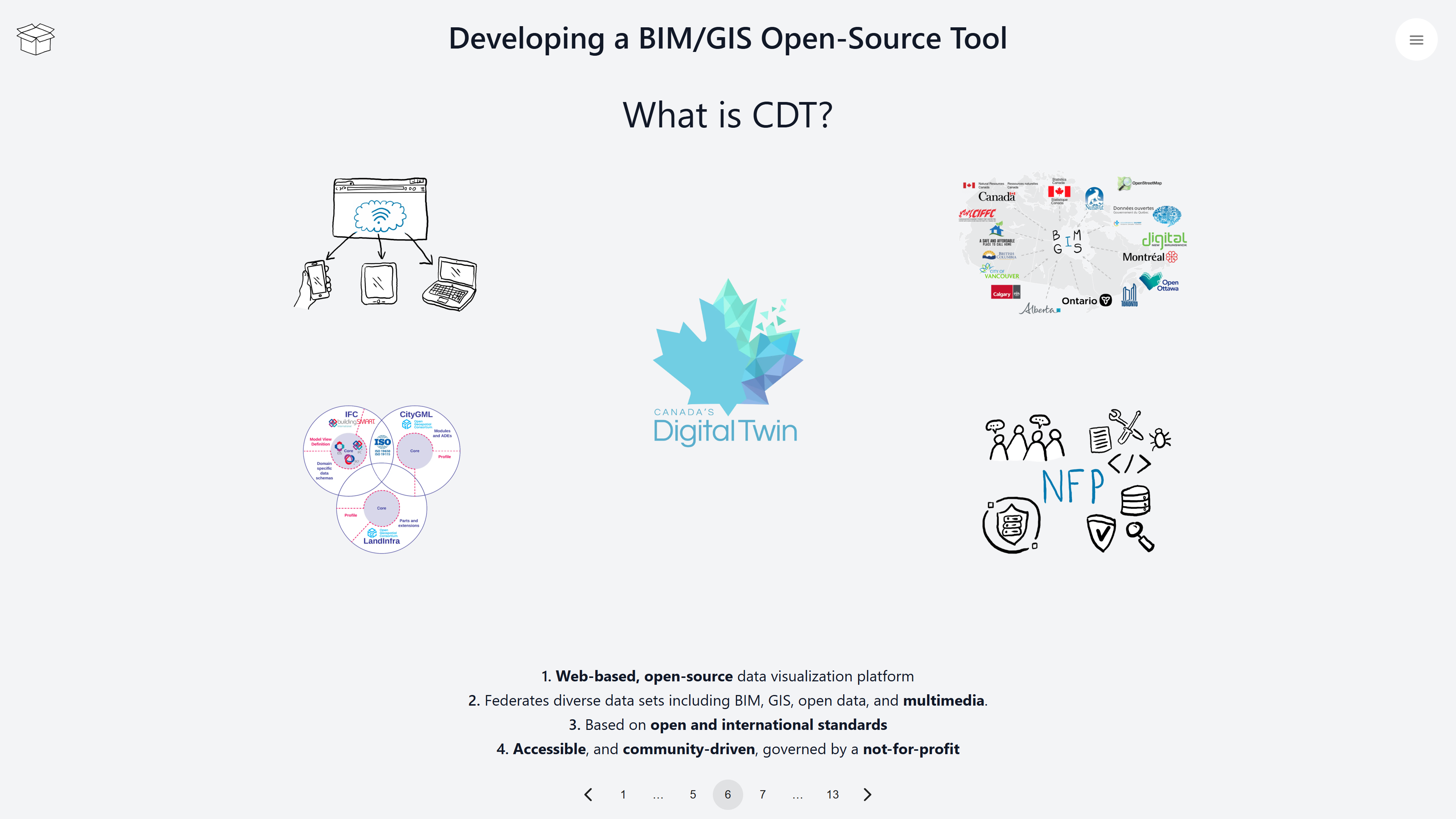

Deblackboxing the Architect's Toolbox is a completed PhD dissertation reframing programming as architectural literacy. Its core-curriculum course at Carleton teaches architects open-source toolmaking, turning passive software users into active toolmakers who reclaim design agency from proprietary vendors—validated by an award-winning open-source BIM/GIS platform, Canada's Digital Twin.

Architecture has become dependent on proprietary software and closed file formats. This dependence has intensified "black boxing": tools that can be understood by their inputs and outputs, but whose internal processes are inaccessible to users. The result is a quiet transfer of agency—from the architect to the software vendor—precisely at the moment digital tools have become central to how buildings are represented, taught, and produced.
The problem is most acute in education. Schools of architecture typically teach students to operate industry-standard software, not to understand how those tools are assembled or how they might be studied, adapted, or remade. Students graduate fluent in interfaces but unable to inspect or modify the instruments that shape their design decisions. Vendor-driven curricula, licensing costs, and closed formats make open tools, open standards, and shared practices harder to encounter, teach, or sustain.
The dissertation confronts a specific pedagogical gap: how can an accredited architecture program cultivate genuine toolmaking literacy—enough grounding in computation that digital tools become intelligible as constructed systems with specific assumptions and constraints—without turning architects into computer scientists or replacing one ideological workflow with another? Solving this required designing and iterating a teachable method, not just arguing for one. The challenge was to prove that architects, given the right pedagogy, can move from passive users to active toolmakers who regain critical control over the design process.
The dissertation resolves the challenge through deblackboxing: the critical act of making digital tools inspectable and modifiable, achieved by synthesizing open-source development with programming pedagogy—treating programming not as a technical utility but as architectural literacy.
The primary intervention is a core-curriculum course, designed and iterated at Carleton University's accredited school of architecture. Rather than teaching students to operate a single platform, it teaches them how tools are assembled and how they can be studied, adapted, and remade. Lectures introduce the histories and logics of contemporary representation tools (CAD, BIM, GIS, computer graphics, web-based 3D)


