

Join
Programs
About
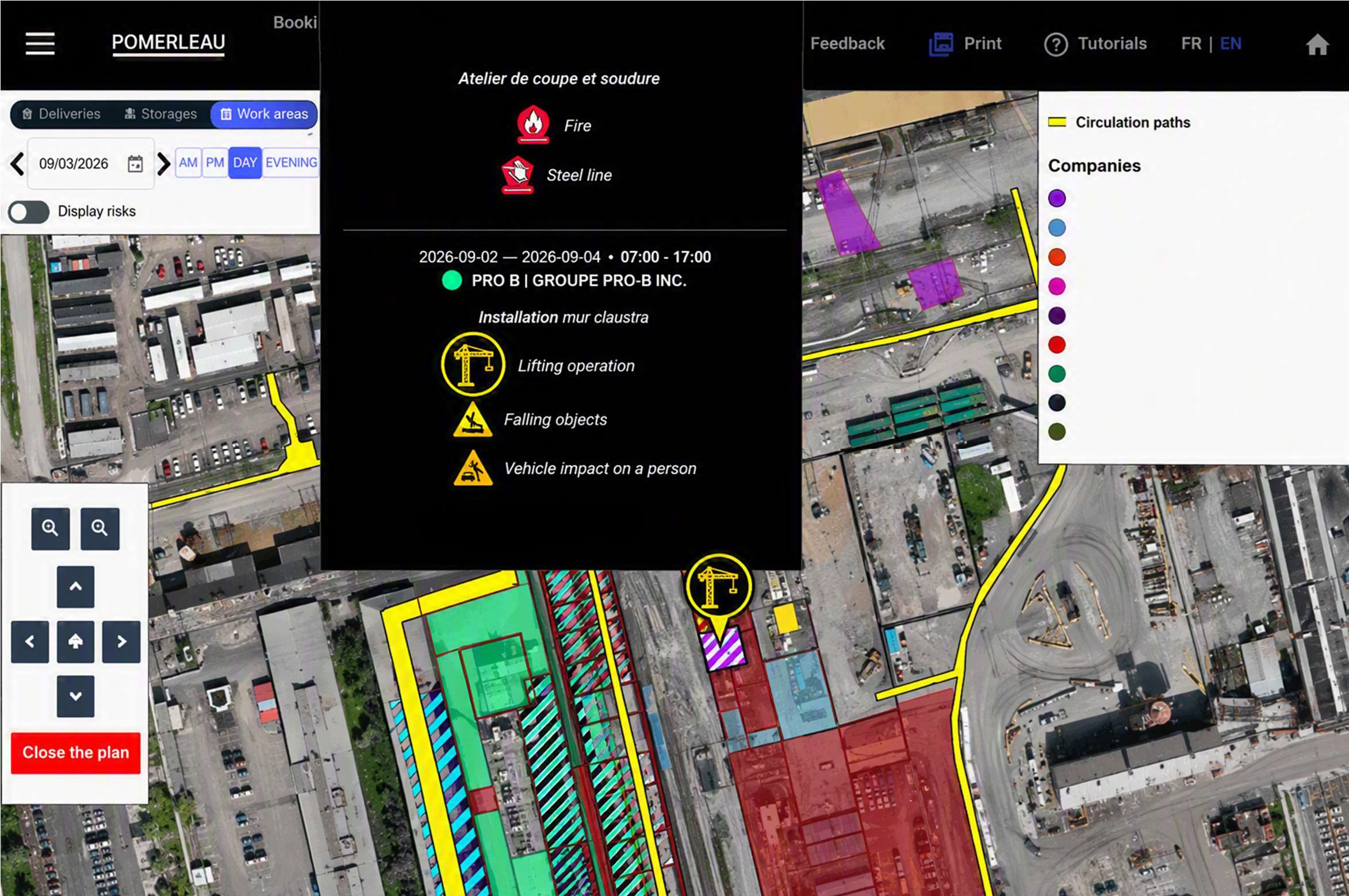


Pomerleau created a Digital Construction Hub connecting the client, subcontractors, designers and project teams through one transparent project view. Progress, field conditions, logistics and critical risks became visible in shared spatial context, strengthening trust, accelerating coordination and enabling teams to act before issues affected the work.

Every day, the project generated information through BIM models, spreadsheets, PDFs, schedules, field observations, drone captures, safety records and multiple digital platforms. Some information was structured; some was not. Each system showed part of the project, but no single environment showed the complete reality to everyone.
The client, subcontractors, designers and Pomerleau therefore relied on separate systems, reports and updates. Progress, field conditions and risks were communicated through meetings, emails and documents that could already be outdated when reviewed. Questions took longer to answer, and information known to one party could remain invisible to others.
The challenge was not simply to centralize data. It was to remove the opacity created by disconnected tools and organizational boundaries while preserving each system as the authoritative source.
Pomerleau addressed this challenge through the Digital Construction Hub, a GIS-powered environment connecting progress, field information, design context, logistics and critical risks in one transparent view. Rather than forcing partners to abandon their tools, the Hub makes the information they need visible, traceable and understandable in one place.
Pomerleau developed the Digital Construction Hub as a digital project-delivery capability. Powered by GIS, the Hub connects information from the project's existing systems and presents it in one shared spatial view for the client, subcontractors and Pomerleau.
The Hub does not replace authoritative systems. It connects their relevant information so no single party must manually collect, interpret and relay the project status. Authorized partners can access progress by area and work package, field observations, design context, logistics, critical risks and common maps and dashboards.
The shared Plan of the Day brings work areas, storage zones, deliveries, circulation routes, active companies and associated risks into one spatial environment. During a scheduled lifting activity, the Hub revealed an overlap between the lifting zone, an active delivery route and nearby subcontractor work areas. The superintendent, Health & Safety team and affected trade partners saw the conflict before work began. The team adjusted the delivery sequence, temporarily restricted access and communicated the revised plan, reducing the risk of workers or vehicles entering the active lifting area.
This verified example demonstrates the solution's practical value: the right partners saw the same activities, in the same location, early enough to act together.


