


Humans and Machines Rethinking Labor in the Age of Construction Automation
By Mihir Somalwar, Robotics and Innovation Lead, Diverge, a Hensel Phelps company
Construction environments have always required teams to pivot quickly and solve challenges. Plans evolve, conditions change and teams rely on the judgment of superintendents, project engineers and skilled craft workers to keep projects moving. For decades, much of that work depended on manual processes that shaped how work happened each day. Teams snapped layout lines by hand, performed inspections visually and tracked progress through site walks and markings on printed drawings carried on clipboards. These tasks required time in the field and placed a heavy emphasis on coordination and human interpretation. As new technologies begin to enter the jobsite, they also raise questions among workers about how these tools may reshape daily responsibilities and long-term roles.
Today, the expertise on the jobsite remains the same, but the tools supporting it are changing how work gets done. Robotic layout systems can print floor plans directly onto concrete slabs with millimeter-level precision, allowing crews to move more quickly into installation. Drones and autonomous robots capture jobsite data continuously and feed it into Artificial Intelligence (AI)-driven tools that help teams coordinate work, plan activities and identify conflicts earlier in the construction process. With more timely and accurate information available, field leaders can make decisions with greater confidence and respond to changing conditions more efficiently.
Jobsites continue to evolve as digital information, robotics and field expertise become more integrated. This shift improves visibility, increases precision and strengthens coordination across complex work. It also reduces repetitive manual tasks and gives teams better tools to plan, communicate and execute work in real time.
Rethinking How We Build
Many discussions about robotics focus on the machines themselves. The greatest productivity gains, however, come from rethinking the underlying process.
Automation that simply replicates existing workflows delivers limited value. For example, a robot snapping chalk lines across a slab or climbing ladders to drill anchors overhead would perform the same tasks craft workers have completed for decades. While the task becomes automated, the process remains unchanged and productivity gains are modest. Greater opportunities emerge when technology enables teams to approach work differently. Robotic layout systems, for example, can print layouts for multiple trades simultaneously with higher accuracy, allowing teams to coordinate installation earlier. In this way, automation supports the expertise of craft workers rather than replacing it, allowing teams to focus on higher-value coordination and installation.
Additionally, construction methods have long been shaped by human physical constraints. Materials such as 4’-by-8’ drywall sheets were standardized so crews could carry and install them manually. As automation becomes more integrated into construction, those assumptions may evolve. Instead of individual sheets sized for manual handling, projects may shift toward larger prefabricated wall panels delivered just in time and positioned by robotic lifting systems. This approach reduces handling steps and shortens installation timelines. In this way, fabrication, logistics and installation can be redesigned around the combined strengths of people and machines.
A similar shift is underway in how teams capture jobsite data. Today, reality capture often requires dedicated scans performed by crews or robotic platforms. Emerging tools are embedding data capture into daily work. Smart glasses, paired with platforms such as Track3D, can capture site visuals as workers move through the jobsite and translate that information into project insights. A superintendent can ask which Requests for Information (RFIs) remain open in a specific area and view that information directly in the field. These tools can also support real-time translation between craft workers and supervisors while giving project managers immediate access to project data.
Shifting Jobsite Skills
As robotics and AI enter the jobsite, new roles are taking shape. Construction teams increasingly rely on professionals who can connect traditional field operations with advanced technology. For many in the field, this shift introduces a learning curve as workers adapt to new tools, workflows and expectations while maintaining the pace and quality of active projects. At the same time, these changes have raised questions across the workforce about how automation may affect traditional roles and long-term career paths.
Robotic systems still require people who understand how to deploy, maintain and troubleshoot them on active projects. These responsibilities include managing software updates, diagnosing hardware issues and coordinating with technology providers when systems behave unexpectedly. This work sits at the intersection of construction operations and robotics engineering. On active projects, this often means field engineers or superintendents stepping in to troubleshoot systems, coordinate with vendors and keep work progressing when issues arise.
These demands are driving a new category of hybrid roles, where professionals understand construction workflows and can work confidently with robotics, digital models and AI-driven tools. Rather than reducing the workforce, these technologies expand it by introducing technical capabilities that help translate emerging innovations into reliable jobsite execution.
From Discovery to Deployment
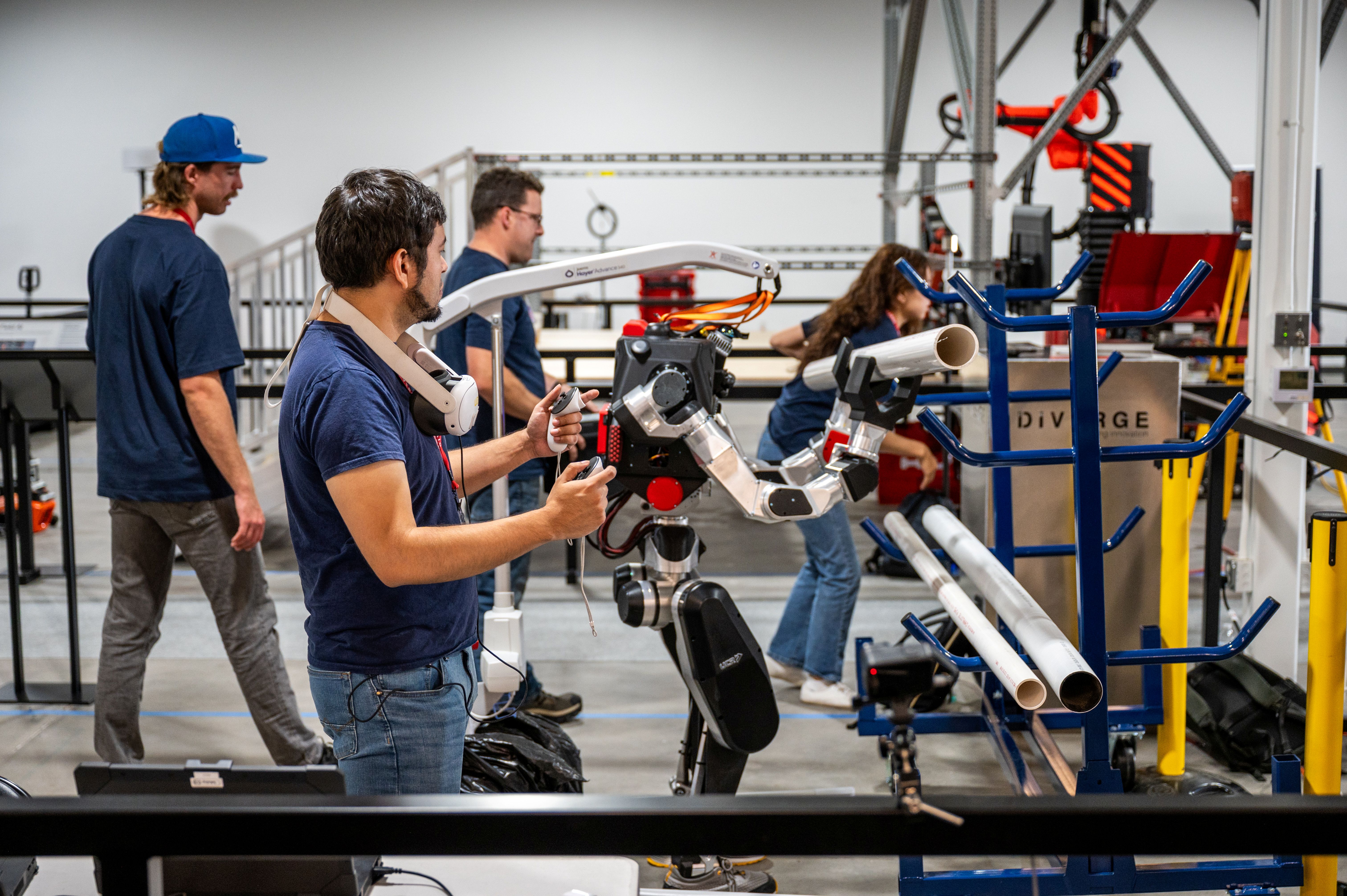
At Hensel Phelps, introducing new technology onto construction sites and into offices requires more than purchasing equipment or software. Tools and solutions must be vetted before integrating them into real workflows. This work begins at Diverge, a Hensel Phelps company, and continues at the Diverge Innovation Center in Phoenix, Arizona.
The process begins with problems identified by project teams on and off jobsites. Technology partners introduce potential solutions, which the Diverge team must evaluate in controlled environments that simulate jobsite conditions and offices. Promising technologies move into field pilots, where the Diverge team supports early development, onboarding and training.
Feedback remains critical throughout this process. The Diverge team collect performance data, document results and work with technology providers to refine hardware, software and algorithms based on real-world conditions. When tools demonstrate clear value, teams expand their use through additional pilots and scale them across more projects.
The Reality of Robotics Adoption in the Construction Industry
Robotics research has advanced rapidly in recent years. New approaches, including Vision Language Action models, combine perception, language understanding and robotic control. These systems allow robots to follow natural language instructions and adapt across tasks.
Deploying these systems on construction sites presents greater challenges than demonstrating them in research labs. Layouts shift, lighting varies and materials rarely appear the same way twice. Unlike manufacturing environments, where robots repeat identical motions in controlled conditions, construction requires machines to operate within continuous variability.
Reliability remains another primary barrier. A robot that achieves a 95% success rate in a research setting may perform well in a lab. On a jobsite performing thousands of operations each day, that same rate could result in frequent disruptions. Crews must clear jams, reset systems or correct work. Even small error rates can interrupt operations at scale and production environments demand significantly higher reliability.
Robots must also connect with the broader systems that support a project. They need to receive input from planning tools, coordinate with crews and report status to project dashboards. Closing this gap requires advances in robotics as well as the infrastructure and teams needed to deploy and manage these systems on active jobsites.
The Future of Construction Automation
The pace of technological progress in construction continues to accelerate. Robotics and AI will become more common across projects in the coming decade.
The future jobsite will reflect a stronger partnership between people and machines. When applied thoughtfully, these technologies can reduce repetitive tasks, improve safety and provide project teams with better information for decision-making. Construction has always depended on human expertise and adaptability. Robotics and AI will strengthen those capabilities by helping skilled professionals build faster, safer and with greater confidence. As these tools become more common, the future workforce will be defined not by replacement, but by how people and technology work together to deliver projects more effectively.


