


A People‑Centered Approach to Construction Innovation

By Holynde Smiechowski, Corporate AI Lead, and Bill Bennington, Senior Manager, Integrated Construction Services, both, PCL Construction
For centuries, construction has been powered by people. Our judgment, experience, relationships and ability to solve problems in real time have always been at the heart of how we build. Yet as tools, systems and administrative demands have multiplied, too much of that expertise has been pulled away from the work that matters most. Today, technology is giving us an opportunity to reverse that trend. Not by replacing people, but by restoring balance and helping us get back to the human side of building.
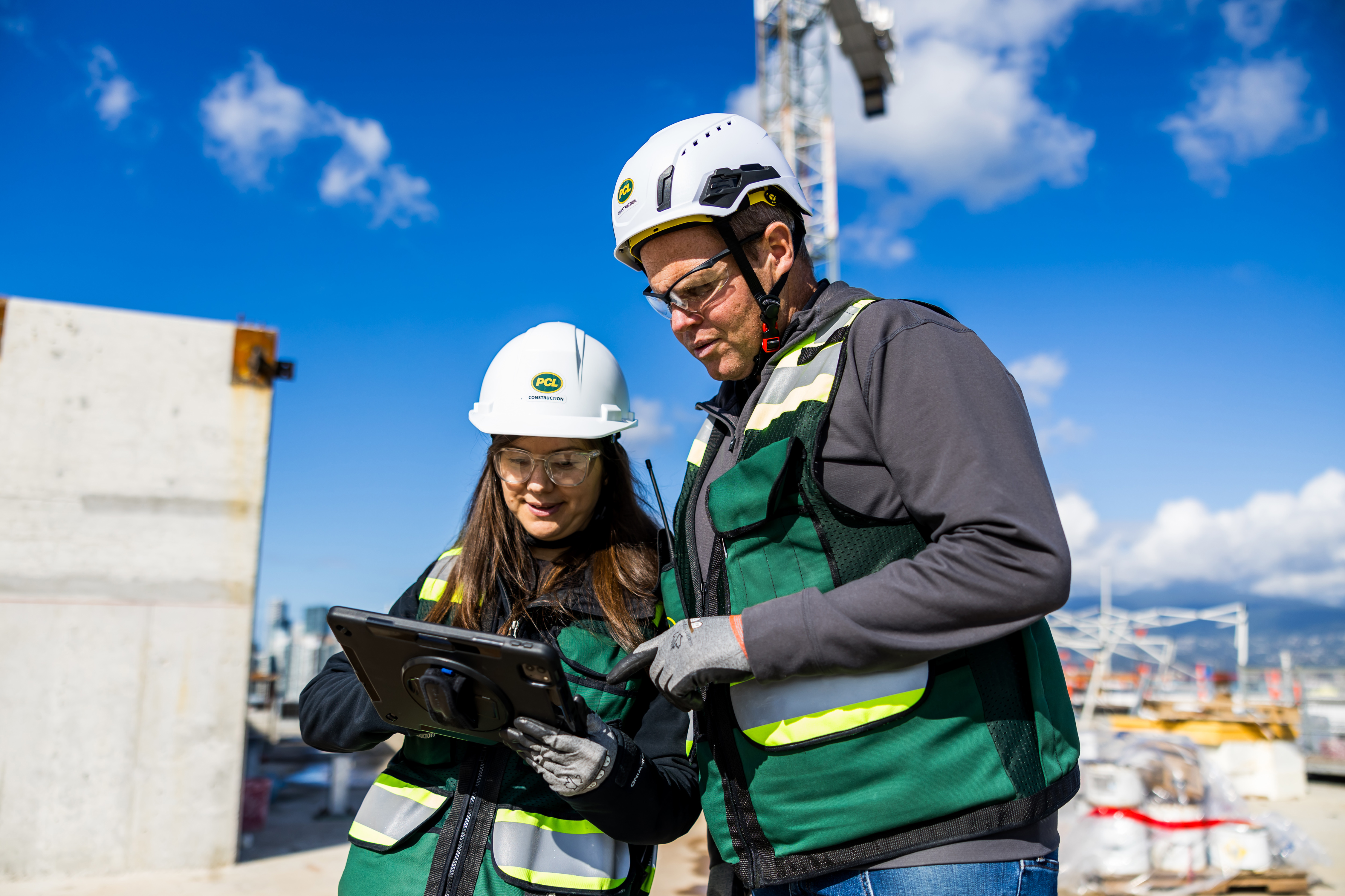
A people‑centered approach to construction innovation recognizes the value of partnership between people and machines. When technology takes on repetitive work such as searching, reconciling, documenting and navigating multiple systems, it frees project teams to concentrate on what they do best: building, leading and making informed decisions. This shift is about restoring focus, not reducing headcount or cutting jobs. The goal is to get boots back on the ground, restore meaningful human interaction, and use technology as a tool that supports how we build instead of letting it get in the way.
Leveraging AI To Support How We Work: Automating Repetitive Tasks, Enhancing the Workforce
Artificial intelligence (AI) is a powerful tool to help us discover new and better ways to lead our industry. At PCL Construction, that belief led to the creation of a new Corporate AI Lead role, with Holynde Smiechowski appointed to guide companywide AI implementation and adoption in a way that is grounded in how PCL builds. With deep experience leading projects in the field and across diverse sectors, Smiechowski brings a practical, builder‑first perspective to how AI can support field teams.
“People-centered AI means using technology to remove friction from people’s work, not replace their judgment,” says Smiechowski.
“On real projects, it shows up as AI handling repetitive tasks, like finding information, summarizing documents or drafting first passes. This empowers teams to focus on decisions that require experience, context and accountability. Our people always stay in control, using AI as a support tool, not an autopilot.”
In Smiechowski’s model, human expertise stays focused on risk, constructability, sequencing, safety and decision making, while AI is embedded in the tools and processes already being used successfully.
In practice, PCL project teams are already seeing the benefits of automating what was once a fully manual process for comparing drawing revisions. With a purpose‑built, embedded AI agent currently called Drawing Overlay Agent, teams can instantly generate red‑line and green‑line overlays that clearly show what has changed between drawing sets. What used to be an error‑prone task taking hours or even days is now a fast, reliable review process, allowing constructors to stay focused on execution rather than manual drawing checks.
“I believe most construction teams feel cautiously optimistic about AI today,” says Smiechowski.
“They’re interested when it clearly saves time or reduces frustration, but skeptical of the hype and quick to disengage if a tool creates rework or uncertainty. We gain trust when AI delivers small, practical wins that support better decisions rather than promising sweeping transformation.”
The New Construction Skillset: Data‑Literate, Tech‑Enabled Builders
Tech-enabled building is nothing new, according to Bill Bennington, senior manager, integrated construction services for PCL Construction. “When I came out of school, I was expected to know design and scheduling software. What has changed is the pace at which those tools evolve,” Bennington says.
“Builders need to adopt a mindset of continuous learning and carve out the time to stay current and understand what’s changing within these systems. If we don’t lean into adaptability, we’re going to be left behind.”
As work becomes more complex and teams more mobile, the industry is facing a growing need for greater standardization across projects, offices and regions. At the same time, closing the digital gap between office and field teams is critical. Tools must be right‑sized for the realities of job sites, designed so field teams can properly use them, and focused on enhancing day‑to‑day work rather than adding friction.
“Small practical wins include using AI to analyze a spreadsheet for data-entry errors, rather than burning an afternoon hunting for the same mistake manually,” says Smiechowski.
“We’ve used AI to extract and consolidate contract requirements, along with their reference sections, when the information is spread across various appendices and different files. This helps us quickly understand how to respond to site risks like flooding or what steps need to be followed during a specific change event. Beyond that, teams are using AI to analyze data and trends in various Power BI dashboards, such as those tracking concrete pours, requests for information and field instructions, and safety data, to support different reporting activities or identify upcoming priorities. Encouraging our teams to become more proficient in using AI through simple, low-risk actions will help with adoption and reduce skepticism.”
Ethical Adoption and Trust: Doing Automation “the PCL Way”
Construction professionals and organizations looking to adopt AI should start by embedding it into everyday work, rather than treating it as a separate initiative. Use AI first on familiar tasks where teams already have expertise, so its strengths and limitations are easy to recognize and verify. Keep people actively involved by validating outputs, sharing feedback and maintaining clear accountability, especially where accuracy and risk matter. Today’s AI capabilities are only the beginning, so the real advantage comes from building human capability alongside the technology as it continues to evolve.
“Safety is a great example. You’ll never rely on AI to make safety decisions, because we will always trust the people on the ground who understand what’s really happening on-site,” says Smiechowski. “AI can help by surfacing patterns and trends, like recent incidents or near-miss trends across a district or common risks at certain times of the year, so teams have better awareness. But identifying hazards, making judgment calls and conducting investigations will always sit with superintendents, safety professionals and project teams.
There’s no replacing boots on the ground. The final call will always be made by people.
The Future Outlook: Managing Complexity to Support Better Decisions
Looking ahead, AI will increasingly handle the heavy lift of information, connecting data across systems, organizing it at scale and surfacing the insights teams need to make informed decisions.
“As institutional knowledge becomes harder to retain with the retirement of long‑tenured employees, AI has the potential to help capture, scale and transfer that expertise across the organization,” says Smiechowski. “But ownership never changes. People will always remain responsible for the final output, using AI to bring clarity to complexity rather than replacing judgment.”
Together, those principles point to a future where AI quietly manages complexity in the background, so people can spend more time where judgment, relationships and leadership matter most.
“Over time, we’ve shifted focus from the field and into offices and systems, and that’s pulled us away from our trades, our clients, and proactive problem solving,” says Bennington. “I see AI as a way to restore that balance by taking on administrative work so we can spend more time on site, managing work where it actually happens.”
Success with AI and automation comes from augmenting the way we already build by embedding AI into familiar processes and evolving its use over time. By enabling AI to manage data and patterns in the background, teams can spend more time with boots on the ground, collaborating with clients and applying experience where it matters most. As technology continues to evolve, our focus as an industry should remain steady: use AI to support better decisions, stronger relationships and better project outcomes, all with people firmly in control.


