

Join
Programs
About


Most AI-in-construction conversations start with tools. Ours started with a question: if you were founding a GC today, with no legacy systems and no legacy headcount, how would you structure the company?
Altero Construction is a commercial general contractor in the San Francisco Bay Area specializing in tenant improvement and life sciences build-out. We run a management-forward model with no self-perform field crews, and we built our operations AI-native from day one. This session is a working case study of that build: the operating architecture, the sequencing decisions, and the failures.
The core of the talk is how we designed the company as three productized service lines: preconstruction, project controls, and financial operations. For preconstruction alone, that meant writing 38 standard operating procedures before automating anything, then building 13 operational agents and 21 CSI division-level estimating agents on top of them. The rule that made this work: SOP-first, automation second. If a human can't execute the procedure from the document, an agent can't either.
We'll walk through what this changed in practice: how a small team runs a full bid cycle at the pace of a much larger precon department, where AI genuinely compresses cost and cycle time, and where it confidently produces garbage until you build the review gates to catch it. We made ourselves client zero and refused to trust any workflow that hadn't survived our own live pursuits.
This isn't a startup pitch and it isn't a research talk. It's an operator's account from a firm whose principals have delivered over $2 billion in commercial and life sciences work the traditional way, and chose to rebuild the operating model rather than replicate it. Attendees from GCs and trade contractors will leave with a sequencing framework they can apply at any scale: which functions to systematize first, what to document before automating, and how to judge whether an AI workflow is production-ready or just impressive.
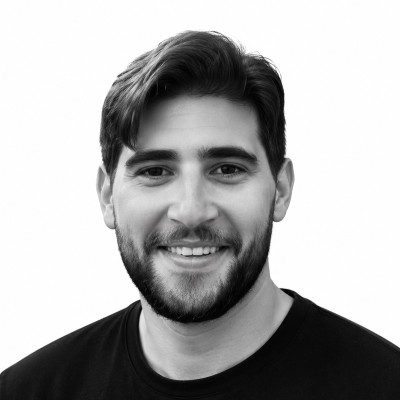
Elie Alchaer is the founder and principal of Altero Construction, a San Francisco Bay Area commercial general contractor specializing in tenant improvement and life sciences build-out. Altero operates an AI-native, management-forward model, with documented procedures and purpose-built AI agents running preconstruction, project controls, and financial operations. Before founding Altero, Elie delivered over $2 billion in commercial and life sciences construction in senior roles at major Bay Area firms, including 430 California Street, 475 Sansome, and SmartLabs at 750 Gateway. He also leads Custom GC Apps, which builds AI-native operations systems for GCs and trade contractors, with Altero serving as client zero for everything it ships.
Most AI-in-construction conversations start with tools. Ours started with a question: if you were founding a GC today, with no legacy systems and no legacy headcount, how would you structure the company?
Altero Construction is a commercial general contractor in the San Francisco Bay Area specializing in tenant improvement and life sciences build-out. We run a management-forward model with no self-perform field crews, and we built our operations AI-native from day one. This session is a working case study of that build: the operating architecture, the sequencing decisions, and the failures.
The core of the talk is how we designed the company as three productized service lines: preconstruction, project controls, and financial operations. For preconstruction alone, that meant writing 38 standard operating procedures before automating anything, then building 13 operational agents and 21 CSI division-level estimating agents on top of them. The rule that made this work: SOP-first, automation second. If a human can't execute the procedure from the document, an agent can't either.
We'll walk through what this changed in practice: how a small team runs a full bid cycle at the pace of a much larger precon department, where AI genuinely compresses cost and cycle time, and where it confidently produces garbage until you build the review gates to catch it. We made ourselves client zero and refused to trust any workflow that hadn't survived our own live pursuits.
This isn't a startup pitch and it isn't a research talk. It's an operator's account from a firm whose principals have delivered over $2 billion in commercial and life sciences work the traditional way, and chose to rebuild the operating model rather than replicate it. Attendees from GCs and trade contractors will leave with a sequencing framework they can apply at any scale: which functions to systematize first, what to document before automating, and how to judge whether an AI workflow is production-ready or just impressive.


